7 hr 30 min
Hill of Crosses & Jelgava Heritage Tour from Riga
Cross into Lithuania to explore a legendary pilgrimage site and discover Jelgava's Orthodox treasures
Reserve
Hand-picked by our editors — only the best 5 experiences from 32 reviewed.
Verified partners for every tour, free cancellation where available, and instant confirmation on every booking.
7 hr 30 min
Cross into Lithuania to explore a legendary pilgrimage site and discover Jelgava's Orthodox treasures
Reserve
7 hr 30 min
Cross two Baltic nations in a single day with guided stops at Lithuania's sacred pilgrimage site and Latvia's historic riverside city
Reserve
9 hr
Cross-border journey through Latvia and Lithuania visiting baroque splendor, medieval ruins, and a legendary pilgrimage site
ReservePrices from verified partners. Availability updates in real time at checkout. Free cancellation policies apply where shown.
The landmarks, rooms, and views travelers on this tour remember — all visible on a single visit.
The highest point of the site, which holds the oldest and most significant cross formations. It is the primary focal point for all visitors and serves as the visual anchor of the landmark.
A modern structure providing a quiet space for visitors near the entrance. It complements the ancient feel of the surrounding outdoor site.
Meandering trails that weave through hundreds of thousands of crosses. These paths allow visitors to get close to the individual monuments.
Located near the entrance, these stalls offer handmade crosses of various materials. Supporting local craftsmen helps preserve the site's unique cultural traditions.
Detailed metalwork displayed throughout the site, showcasing traditional Lithuanian blacksmithing techniques. These represent a different aesthetic from the more common wooden crosses.
The Hill of Crosses offers a profound, somber outdoor reflection, whereas Rundale Palace provides a refined encounter with baroque grandeur; choosing between them depends on whether you prefer raw symbolism or historical opulence for your riga to hill of crosses to vilnius tour.
| Feature | Top pick Hill of Crosses | Rundale Palace |
|---|---|---|
Experience Type |
Open-air pilgrimage site | Baroque palace museum |
Time Requirement |
1–2 hours | 2–3 hours |
Atmosphere |
Spiritual and somber | Regal and formal |
Accessibility |
Flat paths; mostly gravel | Stairs and polished floors |
Group Size Suitability |
Suitable for all sizes | Best for small groups |
Facilities |
Visitor center; parking | Guided tours; restaurant; gardens |
| See tickets → |
Verdict: Select the Hill of Crosses for a uniquely contemplative experience on your riga to hill of crosses to vilnius journey, or prioritize Rundale Palace if you seek to explore preserved aristocratic interiors and formal gardens with riga to hill of crosses to vilnius tickets.
Choose your ticket, select your date, and reserve in under two minutes. Secure checkout handled by our verified partner.
Instant confirmation by email, with a mobile voucher you can save offline. No printing, no queuing at a collection desk.
Arrive at the entrance, show your voucher on your phone, and walk in. Most tickets include priority or skip-the-line access.
Practical details for your visit straight from our verified partners — hours, access, rules, and how to get there.
Jurgaičiai 81439
Primary arrival point for coaches and cars
Follow the A12 road and look for brown signage indicating the turnoff. Parking is available directly on-site.
Take a bus to Šiauliai and hire a taxi for the final 12km stretch to the site.
Casual, respectful attire is recommended as this is a site of religious and historical significance. Please wear comfortable walking shoes suitable for gravel paths.
There are no security checkpoints at this open-air location. Visitors should keep personal belongings with them at all times.
Photography is permitted and encouraged throughout the site. Please remain respectful of other visitors and ongoing religious observances.
The main paths are gravel and may be uneven, which can pose challenges for wheelchair users. Visitors with mobility aids should exercise caution, especially in damp conditions.
Mobile phones are permitted for use, including navigation and photography. Signal strength is generally reliable in this rural area.
The area is open and family-friendly, allowing children to explore the site safely. There are no dedicated facilities, so ensure you have necessary supplies before arrival.
There are no dining facilities directly on the hill. Nearby shops in the village offer basic refreshments.
Pets are permitted if kept on a leash at all times. Please ensure you clean up after your animals to maintain the site's cleanliness.
The Hill of Crosses is a unique monument of folk art and faith. Maintaining its sanctity is a shared responsibility among all guests.
Best time to go, insider tips, nearby landmarks, and the cancellation fine print — flip through to skim what matters to you.
How crowds, weather, and events shift across the year.
Ideal for warm, long days to enjoy the landscape. Temperatures are pleasant, though this period sees the highest tourist volume.
The landscape transitions into vibrant colors. Fewer crowds make for an atmospheric experience during the cooler months.
Snow often blankets the crosses, providing a striking visual contrast. Access is still possible, but paths can be slippery.
The site begins to bloom as temperatures rise. Mud can be an issue on the paths, so appropriate footwear is required.
Small details that turn a good visit into a great one.
Follow the recommended 07:00–10:00 window to enjoy the morning light without crowds. This is the best time for photography as the sun hits the crosses from a lower angle.
Many visitors choose to bring their own small cross to leave at the site. You can purchase one at the nearby gift stalls if you do not have one.
Non-bookable sights within a short walk — free to visit, easy to pair.
A small, serene space for quiet contemplation near the main mound. It provides a focal point for those wishing to pray or light a candle.
Flexible, no hidden fees.
As the site features a 0 EUR entrance fee, no tickets are required for entry. Visitors booking a riga to hill of crosses to vilnius tour through third-party operators should refer to the specific agency's refund terms.
Hand-picked options within walking distance — pick a district for vibe, or a specific hotel for convenience.
Convenient access to city dining and transit links for those planning a riga to hill of crosses to vilnius excursion.
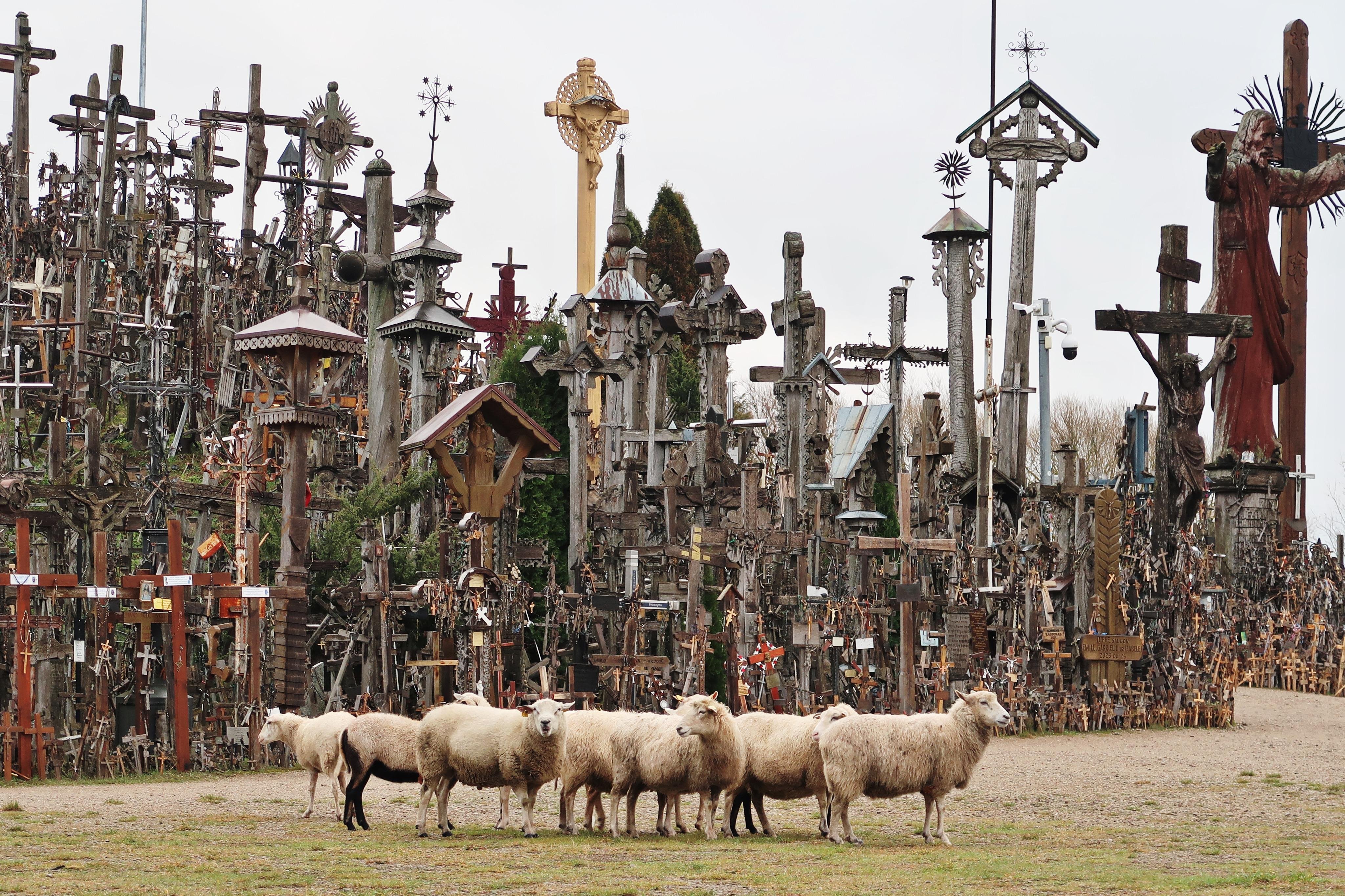
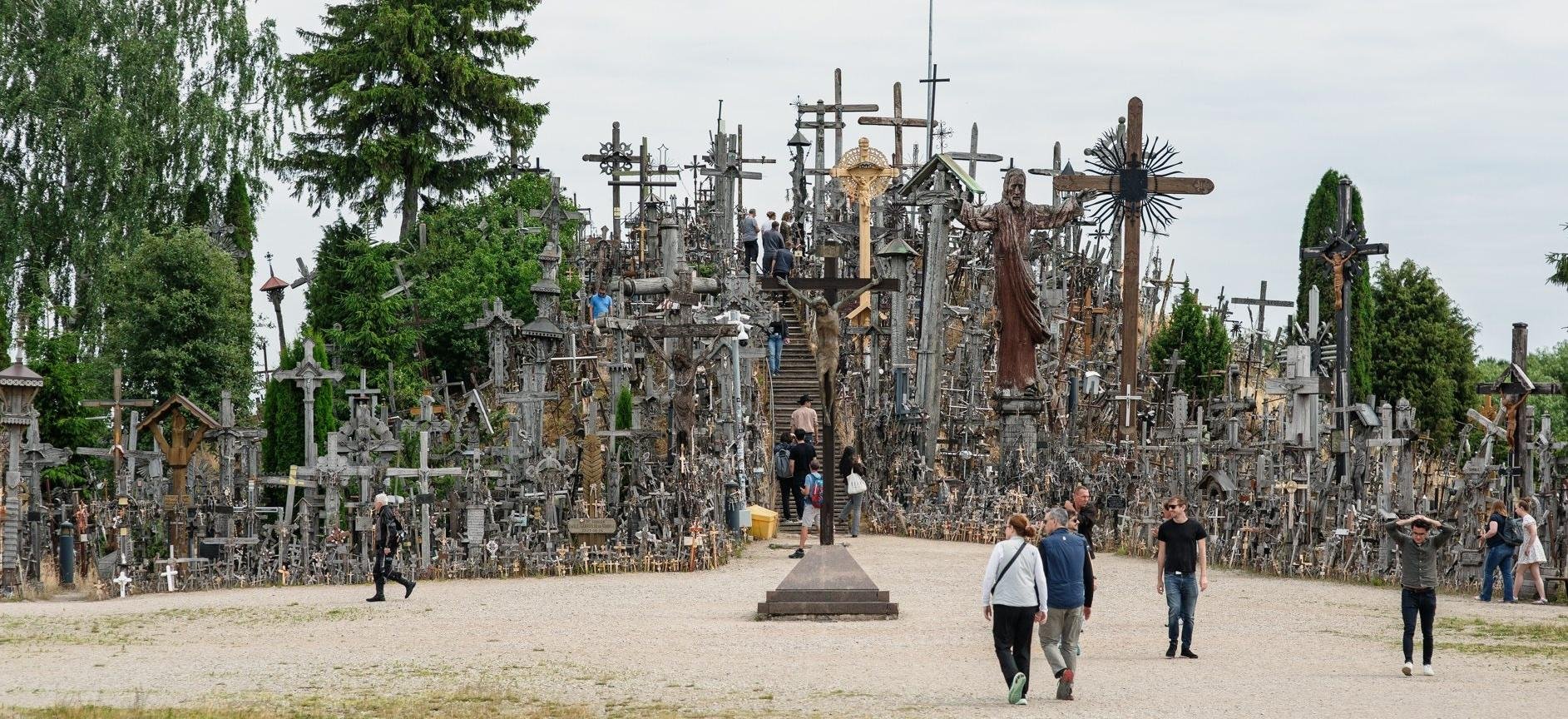
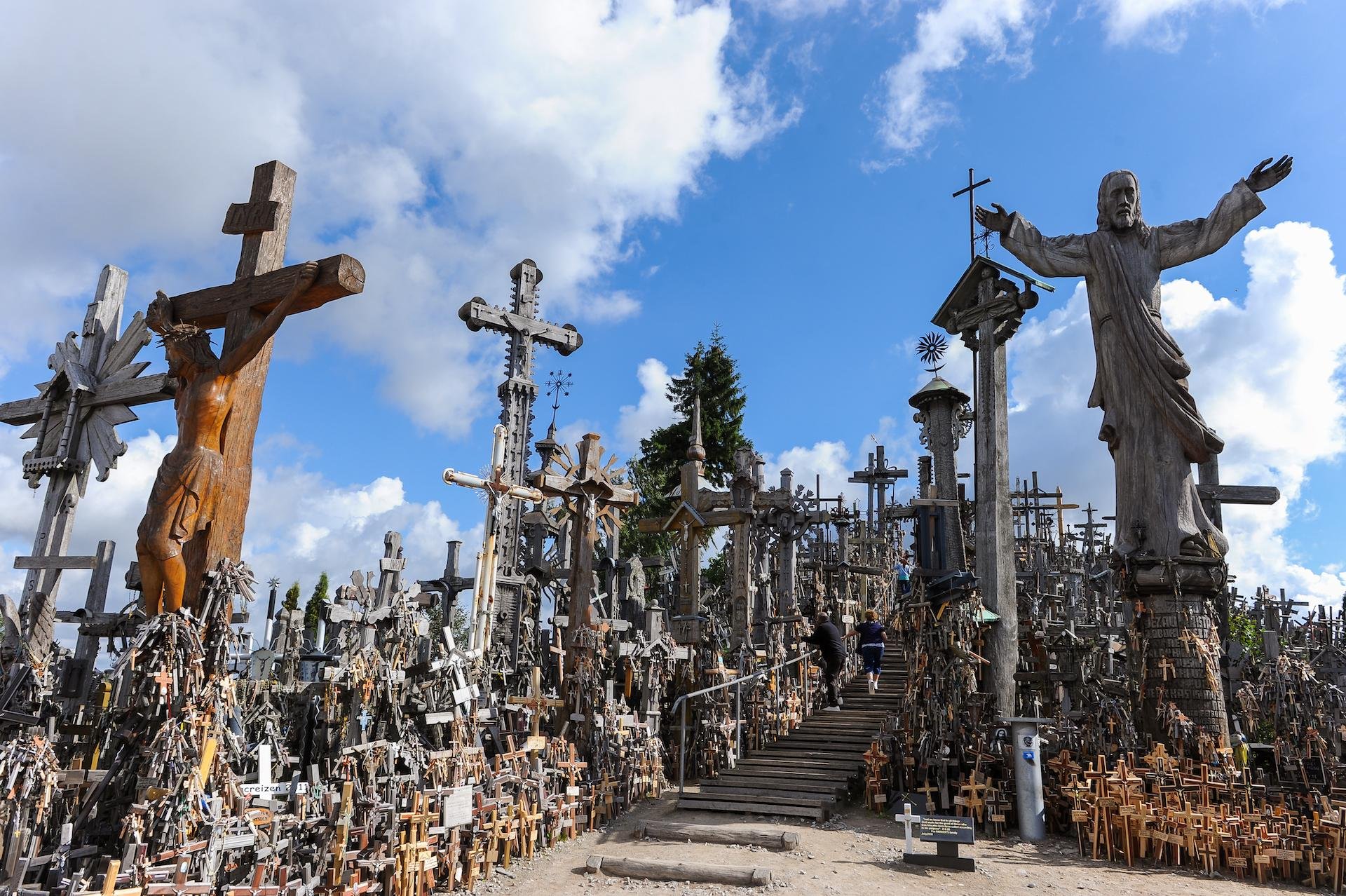
More than 100,000 crosses rise from a low hillside 12 kilometres north of Šiauliai, planted by pilgrims who began arriving in the 14th century after a wooden fortress collapsed nearby. The site became a silent act of defiance during Soviet occupation: authorities bulldozed the crosses three times between 1961 and 1973, but each clearance prompted thousands of replacements. By 1990, the Hill of Crosses — Kryžių Kalnas in Lithuanian — held an estimated 55,000 monuments, a number that doubled after independence. Pope John Paul II celebrated Mass here in 1993, declaring the hill a place for hope, peace, and love. Pope Francis returned in 2015, leaving a Franciscan monastery at the foot of the site that now offers lodging to pilgrims walking the Baltic Way. The journey from Riga to Hill of Crosses to Vilnius traces a 340-kilometre arc across the Latvian-Lithuanian border, threading through Jelgava's ducal palace district and the Rundale estate — Bartolomeo Rastrelli's last completed commission before Catherine the Great summoned him to Saint Petersburg. Most visitors treat the Hill of Crosses as a stopover rather than a destination: the site holds no formal hours, no ticket booth, and no interpretive centre, only a gravel car park and a wooden boardwalk that winds 150 metres uphill through a forest of crucifixes, rosaries, and carved saints. Crosses arrive in every material — wrought iron, birch, stainless steel, ceramic tile — inscribed with names, dates, prayers in Lithuanian, Polish, Russian, and Latin. The tallest monuments reach four metres; the smallest hang from larger crosses like ornaments. The hill sits within sight of the Šiauliai radio telescope and a Soviet-era industrial belt, yet the landscape reads as pastoral: flat fields broken by birch stands and farmsteads with painted wooden shutters. Riga to Hill of Crosses to Vilnius tours typically allocate 45 to 90 minutes at the site, enough time to walk the perimeter, photograph the central cluster, and descend to the monastery café. One-way transfers pause longer, allowing travellers to attend a service or explore the Jurgaičiai village cemetery, where older stone crosses predate the hill itself. The route continues southeast through Kaunas or directly along the A1 motorway, entering Vilnius from the northwest past the Verkiai Regional Park. The entire passage takes six to eight hours with stops, a traverse that connects two UNESCO-listed Old Towns through a landscape still marked by the memory of occupation and the persistence of faith.
"Authorities bulldozed the crosses three times between 1961 and 1973, but each clearance prompted thousands of replacements."
A step-by-step walkthrough of the visit — what you'll see, how long each stage takes, and the details that matter.
You leave Riga's Art Nouveau quarter before sunrise, crossing the Daugava River as the van heads south on the A7. The first stop arrives after 90 minutes: Jelgava's Rundale Palace, where Rastrelli's gilded salons open at 10:00 and your guide allocates 45 minutes to the White Hall and the Rose Room. You rejoin the motorway, crossing into Lithuania near Bauska, and the terrain flattens into a patchwork of rye and rapeseed fields. The Hill of Crosses appears without ceremony — a roadside parking area, then a wooden gate framing a distant slope crowded with silhouettes. You walk the boardwalk slowly, stepping aside as a Lithuanian family plants a new birch cross near the base. Thousands of smaller crucifixes dangle from chains, clinking in the wind. The central hill rises only 10 metres, but the density of monuments creates a labyrinth: you turn left around a three-metre iron cross inscribed in Cyrillic, then right past a ceramic Virgin draped in rosaries. Photographers cluster near the summit, shooting downhill toward the monastery's red-tile roof. You descend after an hour, buy a postcard at the monastery kiosk, and return to the van. The final leg to Vilnius stretches two hours, arriving in the Old Town by late afternoon. The crosses remain visible in your rearview mirror for a full minute, a bristling silhouette against the Lithuanian plain.
The site is open 00:00–23:59 every day of the week. This provides flexibility for travelers arriving at any time. There is a 0 EUR entrance fee (Free entry to the site). You should budget approximately 1 to 2 hours for a thorough visit to the Hill of Crosses. Yes, the site is open 00:00–23:59, allowing for nocturnal visits if desired. The site features gravel paths that can be difficult for wheelchairs, especially in poor weather. While photography is allowed, drones are prohibited to ensure the safety and tranquility of the site. The best arrival window is 07:00–10:00 to avoid crowds and enjoy the peaceful, atmospheric morning light. Yes, this site is frequently integrated into a larger riga to hill of crosses to vilnius route, often combined with stops in Šiauliai or nearby manors. While there is no strict dress code, modest and respectful clothing is recommended due to the religious nature of the landmark.
Please contact us for more information.